
Couples Therapy for Anxiety: How Relationship Counseling Can Reduce Stress Together

Discover how couples therapy for anxiety improves communication, reduces stress, and helps partners rebuild connection through evidence-based relationship counseling.

Picture this: You’re lying in bed next to your partner, but it feels like you’re miles apart. Your chest is tight. Your mind is racing with worries about the future, your relationship, or whether they even understand what you’re going through. Sound familiar?

Anxiety doesn’t just affect you, it ripples through your entire relationship, touching every conversation, every silence, every moment of connection. But here’s what many couples don’t realize: you don’t have to fight anxiety alone. Couples therapy for anxiety offers a powerful path to healing together, transforming stress into strength and distance into deeper connection.

Why Anxiety Thrives in Relationships

When anxiety enters a relationship, it changes everything. One partner might withdraw emotionally, creating walls instead of bridges. The other might feel confused, rejected, or helpless, unsure how to reach across the growing gap.

Research shows that individuals with generalized anxiety disorder are significantly less likely to report being in healthy, supportive relationships. They’re twice as likely to experience relationship problems like frequent arguments and three times more likely to avoid intimacy with their partner.

Here’s the truth: anxiety feeds on miscommunication and misunderstanding. When one person feels anxious, they might become irritable, distant, or constantly seek reassurance. Their partner, not understanding the internal battle happening, might respond with frustration or pull away. This creates a painful cycle where anxiety breeds more anxiety, and both partners feel increasingly alone.

How Couples Therapy for Anxiety Works

Couples therapy online or in-person creates a safe, neutral space where both partners can finally be heard and understood. A trained therapist acts as a guide, helping you navigate the choppy waters of anxiety together rather than letting it pull you under.

During couples therapy for anxiety, you’ll discover patterns you never noticed before. Maybe you realize that your partner’s silence isn’t rejection, it’s their way of managing overwhelming feelings. Or perhaps you learn that your constant checking in isn’t annoying, it’s a sign of how much you care, just expressed in a way that increases tension.

The therapist helps translate these emotional languages, teaching both partners to see anxiety not as a personal attack but as a shared challenge to overcome. Studies indicate that up to 70% of couples report improved communication and reduced stress after participating in joint therapy sessions.

What Happens in Sessions

In couples therapy for anxiety, your therapist will help you identify specific triggers, those moments when anxiety spikes and derails connection. You’ll learn to recognize the warning signs before small worries escalate into major conflicts.

Therapists use evidence-based approaches like Cognitive Behavioral Therapy (CBT) to help you challenge anxious thought patterns together. You’ll discover how to question catastrophic thinking and replace it with more balanced perspectives.

Emotionally Focused Therapy (EFT) is another powerful tool used in couples therapy for anxiety. This approach focuses on strengthening your emotional bond, helping you create a secure attachment where both partners feel safe expressing vulnerability without fear of judgment or abandonment.

Benefits of Facing Anxiety as a Team

Better Communication Under Pressure

Anxiety often hijacks conversations, turning simple discussions into arguments. In therapy, you’ll learn practical communication techniques that work even when emotions run high.

You’ll practice active listening, truly hearing what your partner says instead of planning your defense. You’ll discover how to express your needs clearly without blame or criticism. These skills become your toolkit for navigating stress together.

Reduced Feelings of Isolation

One of the most painful aspects of anxiety is feeling utterly alone with your worries. Couples therapy for anxiety breaks down that isolation by fostering mutual understanding and empathy.

When your partner truly understands how anxiety affects you, the racing thoughts, the physical symptoms, the overwhelming fear, they can offer genuine support instead of well-meaning but unhelpful advice like “just relax” or “don’t worry about it.”

Practical Anxiety Management Tools

Therapists teach couples concrete strategies to manage anxious moments together. You might learn grounding techniques like the 3-3-3 rule for anxiety: identifying three things you see, three sounds you hear, and moving three parts of your body. This simple exercise brings you back to the present moment when worry spirals out of control.

You’ll also develop couple-specific coping plans, agreed-upon strategies for when anxiety strikes. Maybe it’s a code word that signals “I need space right now” or a gentle touch that says “I’m here with you.”

Strengthened Trust and Security

When couples face anxiety together in therapy, something beautiful happens: trust deepens. You’re allowing yourselves to be vulnerable in the presence of a neutral third party, sharing fears and insecurities you might have hidden for years.

This vulnerability, when met with understanding and compassion, creates profound emotional safety. You learn that your relationship can weather difficult emotions, making it stronger and more resilient.

Finding the Right Support: Couples Therapy Near Me and Online Options

The good news? Couples therapy for anxiety is more accessible than ever. If you’re searching for “couples therapy near me,” you’ll likely find qualified therapists in your area who specialize in anxiety and relationship issues.

Can’t find local options or prefer the convenience of home? Couples therapy online has become increasingly popular and effective. Virtual sessions offer the same quality care with added flexibility, perfect for busy schedules or couples who live in areas with limited mental health resources.

When choosing a couples therapy online platform or local therapist, look for professionals trained in evidence-based approaches like CBT or EFT. Don’t hesitate to ask about their experience with anxiety-related relationship issues.

Relationship Practices That Support Therapy
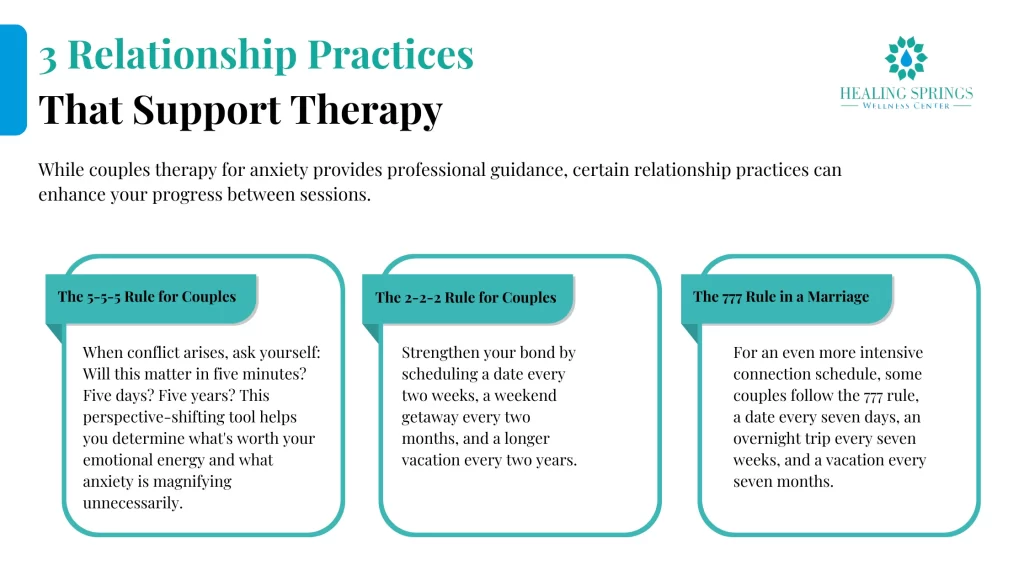
While couples therapy for anxiety provides professional guidance, certain relationship practices can enhance your progress between sessions.

The 5-5-5 Rule for Couples:
When conflict arises, ask yourself: Will this matter in five minutes? Five days? Five years? This perspective-shifting tool helps you determine what’s worth your emotional energy and what anxiety is magnifying unnecessarily.

The 2-2-2 Rule for Couples:
Strengthen your bond by scheduling a date every two weeks, a weekend getaway every two months, and a longer vacation every two years. Regular quality time creates positive experiences that counterbalance anxiety’s negativity.

The 777 Rule in a Marriage:
For an even more intensive connection schedule, some couples follow the 777 rule, a date every seven days, an overnight trip every seven weeks, and a vacation every seven months. Adapt any of these frameworks to fit your life and budget.

These aren’t rigid requirements, they’re frameworks for prioritizing your relationship even when anxiety makes everything feel overwhelming.

FAQ: Your Questions About Couples Therapy for Anxiety

1. Where to watch couples therapy
If you’re curious about how couples therapy works, several television series and documentaries showcase real therapy sessions. Showtime’s “Couples Therapy” offers an intimate look at actual sessions with Dr. Orna Guralnik. These shows can help demystify the process before you begin.

2. What is the 5 5 5 rule for couples?
The 5-5-5 rule encourages perspective during disagreements. Ask: Will this issue matter in 5 minutes, 5 days, or 5 years? This helps distinguish between genuine concerns and anxiety-driven worries that may not deserve extended focus.

3. What is the 3-3-3 rule for anxiety?
The 3-3-3 rule is a grounding technique: name three things you see, three sounds you hear, and move three parts of your body. This sensory exercise interrupts anxious thought spirals and anchors you in the present moment.

4. What is the best therapy for relationship anxiety?
Emotionally Focused Therapy (EFT) and Cognitive Behavioral Couples Therapy (CBCT) are highly effective for relationship anxiety. Both approaches are evidence-based and help couples understand anxiety’s impact while building healthier patterns.

5. What is the 2 2 2 rule for couples?
The 2-2-2 rule suggests going on a date every two weeks, taking a weekend trip every two months, and planning a week-long vacation every two years. Regular quality time strengthens bonds and reduces relationship stress.

6. What is the 777 rule in a marriage?
The 777 rule recommends a date every seven days, an overnight getaway every seven weeks, and a vacation every seven months. It’s a more frequent connection schedule than the 2-2-2 rule, ideal for couples who need intensive relationship investment.

7. What is the 50 30 20 rule for couples?
While primarily a budgeting strategy (50% needs, 30% wants, 20% savings), some couples apply similar proportions to time management, balancing individual needs, shared wants, and investing in the relationship’s future.

Your Path Forward Starts Now

Anxiety in relationships doesn’t have to mean the end of connection, it can be the beginning of a deeper, more resilient partnership. Couples therapy for anxiety gives you the tools, insights, and support to transform stress into strength together.

You don’t have to keep lying awake feeling alone. You don’t have to keep misunderstanding each other. Help is available, and healing is possible.

Ready to reduce anxiety and rebuild your connection? At Healing Springs Wellness, our experienced therapists specialize in couples therapy for anxiety, offering both in-person and couples therapy online options tailored to your unique needs. Schedule your consultation today and discover how working together can bring you closer than ever before.


This article is for informational purposes only and does not constitute medical advice. Please consult with a qualified mental health professional for personalized guidance.
 

Couples Therapy for Anxiety: How Relationship Counseling Can Reduce Stress Together

Picture this: You’re lying in bed next to your partner, but it feels like you’re miles apart. Your chest is tight. Your mind is racing with worries about the future, your relationship, or whether they even understand what you’re going through. Sound familiar?

Anxiety doesn’t just affect you, it ripples through your entire relationship, touching every conversation, every silence, every moment of connection. But here’s what many couples don’t realize: you don’t have to fight anxiety alone. Couples therapy for anxiety offers a powerful path to healing together, transforming stress into strength and distance into deeper connection.

Why Anxiety Thrives in Relationships

When anxiety enters a relationship, it changes everything. One partner might withdraw emotionally, creating walls instead of bridges. The other might feel confused, rejected, or helpless, unsure how to reach across the growing gap.

Research shows that individuals with generalized anxiety disorder are significantly less likely to report being in healthy, supportive relationships. They’re twice as likely to experience relationship problems like frequent arguments and three times more likely to avoid intimacy with their partner.

Here’s the truth: anxiety feeds on miscommunication and misunderstanding. When one person feels anxious, they might become irritable, distant, or constantly seek reassurance. Their partner, not understanding the internal battle happening, might respond with frustration or pull away. This creates a painful cycle where anxiety breeds more anxiety, and both partners feel increasingly alone.

How Couples Therapy for Anxiety Works

Couples therapy online or in-person creates a safe, neutral space where both partners can finally be heard and understood. A trained therapist acts as a guide, helping you navigate the choppy waters of anxiety together rather than letting it pull you under.

During couples therapy for anxiety, you’ll discover patterns you never noticed before. Maybe you realize that your partner’s silence isn’t rejection, it’s their way of managing overwhelming feelings. Or perhaps you learn that your constant checking in isn’t annoying, it’s a sign of how much you care, just expressed in a way that increases tension.

The therapist helps translate these emotional languages, teaching both partners to see anxiety not as a personal attack but as a shared challenge to overcome. Studies indicate that up to 70% of couples report improved communication and reduced stress after participating in joint therapy sessions.

What Happens in Sessions

In couples therapy for anxiety, your therapist will help you identify specific triggers, those moments when anxiety spikes and derails connection. You’ll learn to recognize the warning signs before small worries escalate into major conflicts.

Therapists use evidence-based approaches like Cognitive Behavioral Therapy (CBT) to help you challenge anxious thought patterns together. You’ll discover how to question catastrophic thinking and replace it with more balanced perspectives.

Emotionally Focused Therapy (EFT) is another powerful tool used in couples therapy for anxiety. This approach focuses on strengthening your emotional bond, helping you create a secure attachment where both partners feel safe expressing vulnerability without fear of judgment or abandonment.

Benefits of Facing Anxiety as a Team

Better Communication Under Pressure

Anxiety often hijacks conversations, turning simple discussions into arguments. In therapy, you’ll learn practical communication techniques that work even when emotions run high.

You’ll practice active listening, truly hearing what your partner says instead of planning your defense. You’ll discover how to express your needs clearly without blame or criticism. These skills become your toolkit for navigating stress together.

Reduced Feelings of Isolation

One of the most painful aspects of anxiety is feeling utterly alone with your worries. Couples therapy for anxiety breaks down that isolation by fostering mutual understanding and empathy.

When your partner truly understands how anxiety affects you, the racing thoughts, the physical symptoms, the overwhelming fear, they can offer genuine support instead of well-meaning but unhelpful advice like “just relax” or “don’t worry about it.”

Practical Anxiety Management Tools

Therapists teach couples concrete strategies to manage anxious moments together. You might learn grounding techniques like the 3-3-3 rule for anxiety: identifying three things you see, three sounds you hear, and moving three parts of your body. This simple exercise brings you back to the present moment when worry spirals out of control.

You’ll also develop couple-specific coping plans, agreed-upon strategies for when anxiety strikes. Maybe it’s a code word that signals “I need space right now” or a gentle touch that says “I’m here with you.”

Strengthened Trust and Security

When couples face anxiety together in therapy, something beautiful happens: trust deepens. You’re allowing yourselves to be vulnerable in the presence of a neutral third party, sharing fears and insecurities you might have hidden for years.

This vulnerability, when met with understanding and compassion, creates profound emotional safety. You learn that your relationship can weather difficult emotions, making it stronger and more resilient.

Finding the Right Support: Couples Therapy Near Me and Online Options

The good news? Couples therapy for anxiety is more accessible than ever. If you’re searching for “couples therapy near me,” you’ll likely find qualified therapists in your area who specialize in anxiety and relationship issues.

Can’t find local options or prefer the convenience of home? Couples therapy online has become increasingly popular and effective. Virtual sessions offer the same quality care with added flexibility, perfect for busy schedules or couples who live in areas with limited mental health resources.

When choosing a couples therapy online platform or local therapist, look for professionals trained in evidence-based approaches like CBT or EFT. Don’t hesitate to ask about their experience with anxiety-related relationship issues.

Relationship Practices That Support Therapy

While couples therapy for anxiety provides professional guidance, certain relationship practices can enhance your progress between sessions.

The 5-5-5 Rule for Couples:
When conflict arises, ask yourself: Will this matter in five minutes? Five days? Five years? This perspective-shifting tool helps you determine what’s worth your emotional energy and what anxiety is magnifying unnecessarily.

The 2-2-2 Rule for Couples:
Strengthen your bond by scheduling a date every two weeks, a weekend getaway every two months, and a longer vacation every two years. Regular quality time creates positive experiences that counterbalance anxiety’s negativity.

The 777 Rule in a Marriage:
For an even more intensive connection schedule, some couples follow the 777 rule, a date every seven days, an overnight trip every seven weeks, and a vacation every seven months. Adapt any of these frameworks to fit your life and budget.

These aren’t rigid requirements, they’re frameworks for prioritizing your relationship even when anxiety makes everything feel overwhelming.

FAQ: Your Questions About Couples Therapy for Anxiety

1. Where to watch couples therapy
If you’re curious about how couples therapy works, several television series and documentaries showcase real therapy sessions. Showtime’s “Couples Therapy” offers an intimate look at actual sessions with Dr. Orna Guralnik. These shows can help demystify the process before you begin.

2. What is the 5 5 5 rule for couples?
The 5-5-5 rule encourages perspective during disagreements. Ask: Will this issue matter in 5 minutes, 5 days, or 5 years? This helps distinguish between genuine concerns and anxiety-driven worries that may not deserve extended focus.

3. What is the 3-3-3 rule for anxiety?
The 3-3-3 rule is a grounding technique: name three things you see, three sounds you hear, and move three parts of your body. This sensory exercise interrupts anxious thought spirals and anchors you in the present moment.

4. What is the best therapy for relationship anxiety?
Emotionally Focused Therapy (EFT) and Cognitive Behavioral Couples Therapy (CBCT) are highly effective for relationship anxiety. Both approaches are evidence-based and help couples understand anxiety’s impact while building healthier patterns.

5. What is the 2 2 2 rule for couples?
The 2-2-2 rule suggests going on a date every two weeks, taking a weekend trip every two months, and planning a week-long vacation every two years. Regular quality time strengthens bonds and reduces relationship stress.

6. What is the 777 rule in a marriage?
The 777 rule recommends a date every seven days, an overnight getaway every seven weeks, and a vacation every seven months. It’s a more frequent connection schedule than the 2-2-2 rule, ideal for couples who need intensive relationship investment.

7. What is the 50 30 20 rule for couples?
While primarily a budgeting strategy (50% needs, 30% wants, 20% savings), some couples apply similar proportions to time management, balancing individual needs, shared wants, and investing in the relationship’s future.

Your Path Forward Starts Now

Anxiety in relationships doesn’t have to mean the end of connection, it can be the beginning of a deeper, more resilient partnership. Couples therapy for anxiety gives you the tools, insights, and support to transform stress into strength together.

You don’t have to keep lying awake feeling alone. You don’t have to keep misunderstanding each other. Help is available, and healing is possible.

Ready to reduce anxiety and rebuild your connection? At Healing Springs Wellness, our experienced therapists specialize in couples therapy for anxiety, offering both in-person and couples therapy online options tailored to your unique needs. Schedule your consultation today and discover how working together can bring you closer than ever before.


This article is for informational purposes only and does not constitute medical advice. Please consult with a qualified mental health professional for personalized guidance.
RELEVANT POSTS