When Holiday Stress Turns Into Anxiety — and How Therapy Can Help

Holiday stress can turn into anxiety, insomnia, or panic. Learn the signs, why it happens, and how therapy helps you regain calm and control.

The twinkling lights are up, the shopping lists are growing, and somehow you’re lying awake at 3 AM with your heart racing. Sound familiar?

Holiday stress affects nearly everyone, but for some, it crosses the line into anxiety that’s harder to shake.

Understanding Holiday Stress

Holiday stress is a normal response to seasonal demands, gift shopping, family gatherings, financial pressure, and packed schedules. Research shows 28% of Americans experience more stress during holidays than last year, with top stressors including affording gifts (46%), grieving loved ones (47%), and challenging family dynamics (35%).

But when does normal holiday stress become something more serious?

When Stress Becomes Anxiety

While holiday stress typically fades once the season ends, anxiety lingers and intensifies. Key differences include:

Holiday Stress:

  • Tied to specific events or deadlines
  • Eases when stressors are resolved
  • Manageable with basic coping strategies
  • Doesn’t disrupt daily functioning

Holiday Anxiety:

  • Persists beyond the holiday season
  • Includes physical symptoms (racing heart, insomnia, panic)
  • Interferes with work, relationships, and daily life
  • Triggers overwhelming worry even about minor issues

Read our panic attack vs anxiety attack guide to understand the difference clearly.

Why Are Holidays So Stressful?

Several factors contribute to heightened holiday stress and mental health challenges:

Financial Pressure – The expectation to buy gifts, host gatherings, and travel creates significant financial strain.

Family Dynamics – Navigating complicated relationships, old conflicts, and differing expectations can trigger intense stress.

Grief and Loss – The holidays amplify feelings of loss for those missing loved ones.

Social Obligations – Endless parties, gatherings, and commitments leave little time for rest.

Perfectionism – The pressure to create “perfect” celebrations adds unrealistic expectations.

Can Holidays Trigger Anxiety?

Yes. Holidays can trigger anxiety disorders or worsen existing conditions. 64% of individuals with mental health disorders report their conditions worsen during holidays.

Common triggers include social situations, family gatherings, financial worries, and disrupted routines.

Holiday Stress Statistics
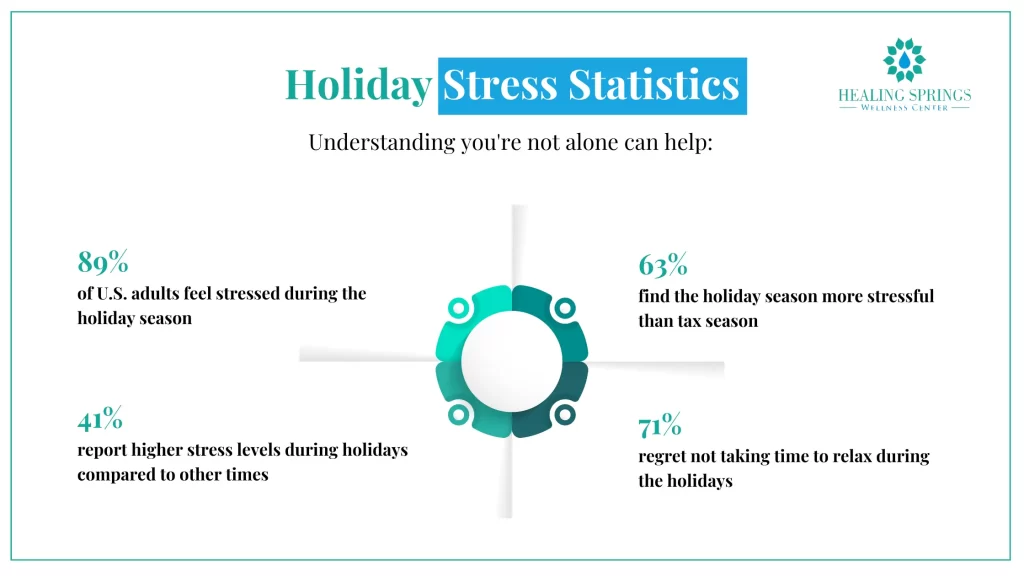
Understanding you’re not alone can help:

  • 89% of U.S. adults feel stressed during the holiday season
  • 41% report higher stress levels during holidays compared to other times
  • 63% find the holiday season more stressful than tax season
  • 71% regret not taking time to relax during the holidays

Holiday Stress Tips: Practical Strategies

1. Set Realistic Expectations

You don’t have to do it all. Choose what matters most and let go of perfectionism.

2. Create a Budget

Financial stress is a top holiday concern. Set spending limits and stick to them.

3. Maintain Boundaries

It’s okay to say no to invitations or requests that overwhelm you. Protect your energy.

4. Prioritize Self-Care

Don’t sacrifice sleep, exercise, or healthy eating. These basics help manage stress.

5. Use the 3-3-3 Anxiety Rule

When anxiety strikes, try this grounding technique: Identify 3 things you can see, 3 sounds you can hear, and move 3 parts of your body. This practice helps ground your mind and body, bringing you back to the present moment.

6. Schedule Downtime

Block out time in your calendar for rest, just like you would for holiday events.

7. Connect Authentically

Focus on meaningful connections rather than obligatory attendance at every event.

For more everyday coping tools, read our reduce your anxiety guide.

Managing Holiday Stress and Mental Health

Effective holiday stress management involves:

Recognize Your Triggers – Identify what specifically causes your stress and plan accordingly.

Practice Mindfulness – Stay present instead of worrying about everything that needs to get done.

Limit Social Media – Comparing your holidays to others’ highlight reels increases stress.

Ask for Help – Delegate tasks and accept offers of support from family and friends.

Maintain Routines – Keep regular sleep schedules and exercise habits as much as possible.

Why Do I Feel Anxious After Coming Back from a Holiday?

Post-holiday anxiety is common. You might experience:

  • Letdown after high expectations
  • Exhaustion from overcommitment
  • Financial stress from overspending
  • Unresolved family conflicts
  • Return to work pressure

The transition back to routine, combined with physical and emotional exhaustion, creates vulnerability to anxiety.

How Therapy Can Help with Holiday Stress Management

Professional support makes a real difference:

Cognitive Behavioral Therapy (CBT) helps identify and change negative thought patterns that fuel holiday anxiety.

Stress Management Techniques provide practical tools for managing overwhelming feelings in the moment.

Boundary Setting work helps you learn to protect your time and energy without guilt.

Processing Grief addresses losses that feel magnified during the holidays.

Anxiety Coping Skills build your long-term resilience beyond just the holiday season.

To explore treatment options, read our guide on the best therapies for every type of anxiety.

When to Seek Professional Help

Consider therapy if you’re experiencing:

  • Persistent anxiety lasting beyond the holiday season
  • Panic attacks or overwhelming dread
  • Insomnia or significant sleep disruption
  • Avoidance of holiday gatherings due to anxiety
  • Physical symptoms (chest pain, nausea, headaches)
  • Difficulty functioning at work or home
  • Using alcohol or substances to cope

Your Path to Peaceful Holidays

Holiday stress doesn’t have to steal your joy. With the right strategies and support, you can navigate the season with more peace and less anxiety.

Remember: the holidays are meant to be enjoyed, not endured. Taking care of your mental health isn’t selfish, it’s essential.

You deserve to experience the joy, connection, and meaning this season can offer when you’re not drowning in stress.

Struggling with holiday stress or anxiety? Our compassionate therapists at Healing Springs Wellness can help you develop effective coping strategies and find peace this season. Don’t let anxiety rob you of holiday joy. Schedule your consultation today and learn how to manage holiday stress effectively.

Disclaimer: This article is for informational purposes only. If you’re experiencing severe anxiety, please consult with our qualified mental health professional.
 

When Holiday Stress Turns Into Anxiety — and How Therapy Can Help

The twinkling lights are up, the shopping lists are growing, and somehow you’re lying awake at 3 AM with your heart racing. Sound familiar?

Holiday stress affects nearly everyone, but for some, it crosses the line into anxiety that’s harder to shake.

Understanding Holiday Stress

Holiday stress is a normal response to seasonal demands, gift shopping, family gatherings, financial pressure, and packed schedules. Research shows 28% of Americans experience more stress during holidays than last year, with top stressors including affording gifts (46%), grieving loved ones (47%), and challenging family dynamics (35%).

But when does normal holiday stress become something more serious?

When Stress Becomes Anxiety

While holiday stress typically fades once the season ends, anxiety lingers and intensifies. Key differences include:

Holiday Stress:

  • Tied to specific events or deadlines
  • Eases when stressors are resolved
  • Manageable with basic coping strategies
  • Doesn’t disrupt daily functioning

Holiday Anxiety:

  • Persists beyond the holiday season
  • Includes physical symptoms (racing heart, insomnia, panic)
  • Interferes with work, relationships, and daily life
  • Triggers overwhelming worry even about minor issues

Read our panic attack vs anxiety attack guide to understand the difference clearly.

Why Are Holidays So Stressful?

Several factors contribute to heightened holiday stress and mental health challenges:

Financial Pressure – The expectation to buy gifts, host gatherings, and travel creates significant financial strain.

Family Dynamics – Navigating complicated relationships, old conflicts, and differing expectations can trigger intense stress.

Grief and Loss – The holidays amplify feelings of loss for those missing loved ones.

Social Obligations – Endless parties, gatherings, and commitments leave little time for rest.

Perfectionism – The pressure to create “perfect” celebrations adds unrealistic expectations.

Can Holidays Trigger Anxiety?

Yes. Holidays can trigger anxiety disorders or worsen existing conditions. 64% of individuals with mental health disorders report their conditions worsen during holidays.

Common triggers include social situations, family gatherings, financial worries, and disrupted routines.

Holiday Stress Statistics

Understanding you’re not alone can help:

  • 89% of U.S. adults feel stressed during the holiday season
  • 41% report higher stress levels during holidays compared to other times
  • 63% find the holiday season more stressful than tax season
  • 71% regret not taking time to relax during the holidays

Holiday Stress Tips: Practical Strategies

1. Set Realistic Expectations

You don’t have to do it all. Choose what matters most and let go of perfectionism.

2. Create a Budget

Financial stress is a top holiday concern. Set spending limits and stick to them.

3. Maintain Boundaries

It’s okay to say no to invitations or requests that overwhelm you. Protect your energy.

4. Prioritize Self-Care

Don’t sacrifice sleep, exercise, or healthy eating. These basics help manage stress.

5. Use the 3-3-3 Anxiety Rule

When anxiety strikes, try this grounding technique: Identify 3 things you can see, 3 sounds you can hear, and move 3 parts of your body. This practice helps ground your mind and body, bringing you back to the present moment.

6. Schedule Downtime

Block out time in your calendar for rest, just like you would for holiday events.

7. Connect Authentically

Focus on meaningful connections rather than obligatory attendance at every event.

For more everyday coping tools, read our reduce your anxiety guide.

Managing Holiday Stress and Mental Health

Effective holiday stress management involves:

Recognize Your Triggers – Identify what specifically causes your stress and plan accordingly.

Practice Mindfulness – Stay present instead of worrying about everything that needs to get done.

Limit Social Media – Comparing your holidays to others’ highlight reels increases stress.

Ask for Help – Delegate tasks and accept offers of support from family and friends.

Maintain Routines – Keep regular sleep schedules and exercise habits as much as possible.

Why Do I Feel Anxious After Coming Back from a Holiday?

Post-holiday anxiety is common. You might experience:

  • Letdown after high expectations
  • Exhaustion from overcommitment
  • Financial stress from overspending
  • Unresolved family conflicts
  • Return to work pressure

The transition back to routine, combined with physical and emotional exhaustion, creates vulnerability to anxiety.

How Therapy Can Help with Holiday Stress Management

Professional support makes a real difference:

Cognitive Behavioral Therapy (CBT) helps identify and change negative thought patterns that fuel holiday anxiety.

Stress Management Techniques provide practical tools for managing overwhelming feelings in the moment.

Boundary Setting work helps you learn to protect your time and energy without guilt.

Processing Grief addresses losses that feel magnified during the holidays.

Anxiety Coping Skills build your long-term resilience beyond just the holiday season.

To explore treatment options, read our guide on the best therapies for every type of anxiety.

When to Seek Professional Help

Consider therapy if you’re experiencing:

  • Persistent anxiety lasting beyond the holiday season
  • Panic attacks or overwhelming dread
  • Insomnia or significant sleep disruption
  • Avoidance of holiday gatherings due to anxiety
  • Physical symptoms (chest pain, nausea, headaches)
  • Difficulty functioning at work or home
  • Using alcohol or substances to cope

Your Path to Peaceful Holidays

Holiday stress doesn’t have to steal your joy. With the right strategies and support, you can navigate the season with more peace and less anxiety.

Remember: the holidays are meant to be enjoyed, not endured. Taking care of your mental health isn’t selfish, it’s essential.

You deserve to experience the joy, connection, and meaning this season can offer when you’re not drowning in stress.

Struggling with holiday stress or anxiety? Our compassionate therapists at Healing Springs Wellness can help you develop effective coping strategies and find peace this season. Don’t let anxiety rob you of holiday joy. Schedule your consultation today and learn how to manage holiday stress effectively.

Disclaimer: This article is for informational purposes only. If you’re experiencing severe anxiety, please consult with our qualified mental health professional.
 

RELEVANT POSTS