Life Transitions and Mental Health: Coping with Change in Your 30s, 40s, and 50s

Life transitions can affect mental health and create uncertainty. See how to cope with change, build resilience and navigate different life stages.

What Are Life Transitions?


Life Transitions refer to the shifts and changes we go through as we move from one stage of life to another.  These changes can be expected like career growth or parenting or unexpected, such as changes in relationships, health, or direction.

If you’ve ever wondered what life transitions are, they are moments where life moves from one phase into another, requiring you to adjust how you think and act. 

While change is a natural part of life, it doesn’t always feel easy. Many people find that life transition counselling or therapy for life transitions helps them feel more steady,  especially when things feel uncertain.

Why Life Transitions Can Affect Mental Health


During Life Transitions, your daily routine and your sense of who you are can feel a bit shaky. Even positive changes can bring a level of uncertainty because you’re dealing with the unknown.
You may experience:

  • Feeling “off” or unsettled
  • Second-guessing your decisions
  • Unexpected emotional highs and lows
  • A strong need for clarity

These responses are natural. They are just signs that your system is trying to keep up with the change. Working with life transition therapy can help you understand these shifts while building supportive coping strategies for life transitions.

Common Life Transitions Across Different Stages

  • Life Transitions in Your 30s

In your 30s, Life Transitions often focus on building stability across different areas of life.


This may include:

  • Career growth or changes
  • Long-term relationships or marriage
  • Parenting decisions
  • Financial responsibilities


This phase can bring both excitement and pressure, as you look closely at your long-term goals.

  • Life Transitions in Your 40s

Your 40s often bring a period of reflection and adjustment.

Common Life Transitions include:

  • Career shifts
  • Changes in family roles
  • Re-evaluating what matters most to you
  • Paying more attention to your health

This stage often encourages a shift toward meaning, balance, and fulfilment.

  • Life Transitions in Your 50s

In your 50s, Life Transitions often involve redefining your identity and future direction.

This can include:

  • Children moving out and becoming independent
  • Career changes or retirement planning
  • Relationship shifts
  • Focusing on your personal well-being

It is a great time to reconnect with yourself and what feels meaningful for your future.

Coping Strategies for Life Transitions

Adjusting to big changes takes time. Having supportive tools can make the process feel more manageable.

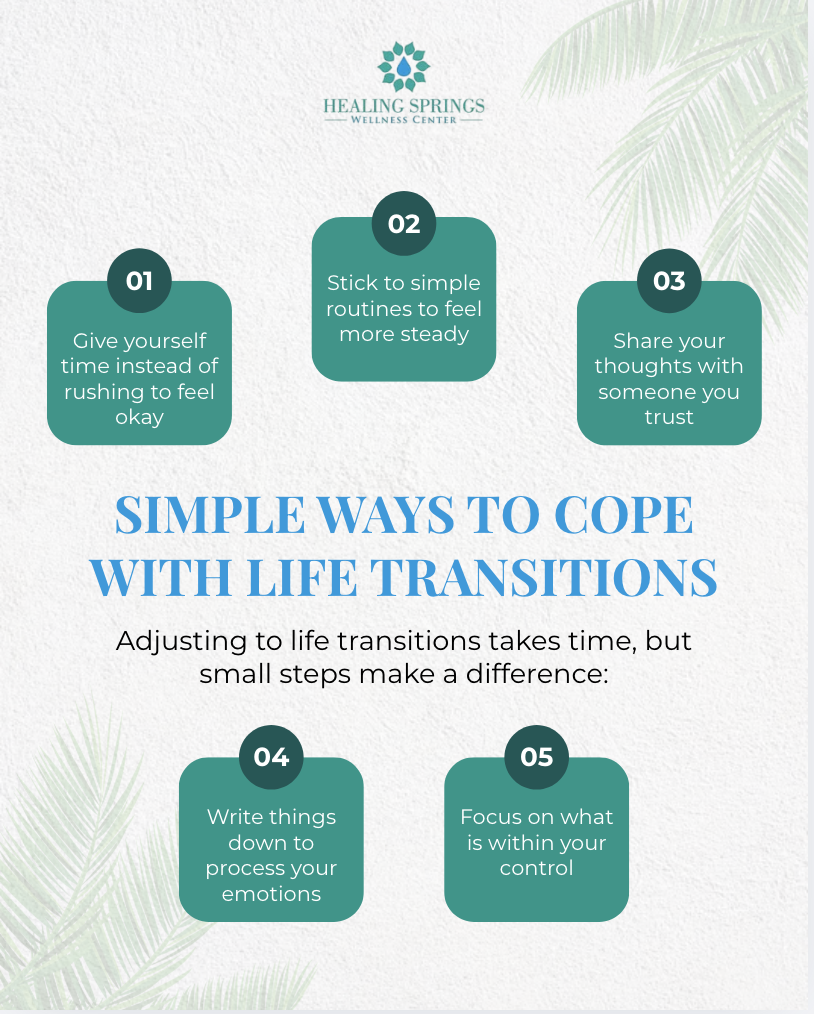
Some helpful coping strategies for life transitions include:

  • Give yourself time : Don’t hurry to “feel okay” immediately
  • Stick to routines : Maintain simple habits to feel more in control 
  • Share with others : Talk to someone you trust
  • Write it down : Practice journaling
  • Focus on today : Only worry about the things you can actually control at the moment

Support through therapy for life transitions can provide the emotional grounding you need during these phases.


When to Consider Therapy for Life Transitions

At times, navigating change alone can feel overwhelming.

You may consider life transition counseling if you:

  • Feel stuck or unsure of your next move
  • Experience ongoing stress
  • Struggle to adjust
  • Need guidance in decision-making

Life transition therapy offers a space to explore your thoughts and build personalised coping strategies for life transitions.

How Therapy Supports You Through Life Transitions

Working with a therapist during Life Transitions can help you:

  • Gain clarity
  • Understand emotional patterns
  • Build resilience
  • Make decisions with confidence

Therapy for life transitions focuses on helping you move forward at your own pace.

Benefits of Navigating Life Transitions Mindfully

When you approach Life Transitions with awareness and support, you may notice:

  • Improved emotional balance
  • Better decision-making
  • Stronger self-awareness
  • Clearer direction in life

Over time, change can feel more manageable and meaningful.

Frequently Asked Questions (FAQs)

  1. What are the examples of life transitions?

Examples of Life Transitions include starting a new job, marriage, parenthood, moving cities, career shifts, retirement, or dealing with changes in relationships and health.


  1. What are the 4 types of life transitions?

The four main types include developmental, situational, health-related, and career-based Life Transitions.

  1. What does life transition mean?

A life transition means moving from one phase to another. It involves making emotional and practical changes to fit your new reality.

  1. What are the 7 stages of transition?

These stages include shock, denial, frustration, low mood, experimentation, decision, and finally feeling settled.

  1. What are the top 10 stressful life events?

These may include loss, separation, job changes, financial changes, health concerns, relocation, and major life decisions.

  1. What are the 7 main life stages?

Infancy, childhood, adolescence, early adulthood, midlife, mature adulthood, and later life; all concluding different Life Transitions.

Final Thoughts

Life Transitions are a natural part of growth, even if they feel uncomfortable at first

You don’t need to have everything figured out right away. With time, right support, and space, things can begin to feel more manageable.

Ready to Navigate Life Transitions with Support?

If you are experiencing change and would like support, you don’t have to go through it alone.

At Healing Springs Wellness, we offer life transition counseling and therapy for life transitions to help you move forward with clarity and confidence.

👉 Explore therapy services

👉 Book a consultation

You can take this one step at a time, with the right support beside you.
Life Transitions and Mental Health: Coping with Change in Your 30s, 40s, and 50s

What Are Life Transitions?

Life Transitions refer to the shifts and changes we go through as we move from one stage of life to another.  These changes can be expected like career growth or parenting or unexpected, such as changes in relationships, health, or direction.

If you’ve ever wondered what life transitions are, they are moments where life moves from one phase into another, requiring you to adjust how you think and act. 

While change is a natural part of life, it doesn’t always feel easy. Many people find that life transition counselling or therapy for life transitions helps them feel more steady,  especially when things feel uncertain.

Why Life Transitions Can Affect Mental Health

During Life Transitions, your daily routine and your sense of who you are can feel a bit shaky. Even positive changes can bring a level of uncertainty because you’re dealing with the unknown.

You may experience:

  • Feeling “off” or unsettled
  • Second-guessing your decisions
  • Unexpected emotional highs and lows
  • A strong need for clarity

These responses are natural. They are just signs that your system is trying to keep up with the change. Working with life transition therapy can help you understand these shifts while building supportive coping strategies for life transitions.

Common Life Transitions Across Different Stages

  • Life Transitions in Your 30s

In your 30s, Life Transitions often focus on building stability across different areas of life.
This may include:

  • Career growth or changes
  • Long-term relationships or marriage
  • Parenting decisions
  • Financial responsibilities


This phase can bring both excitement and pressure, as you look closely at your long-term goals.

  • Life Transitions in Your 40s

Your 40s often bring a period of reflection and adjustment.

Common Life Transitions include:

  • Career shifts
  • Changes in family roles
  • Re-evaluating what matters most to you
  • Paying more attention to your health

This stage often encourages a shift toward meaning, balance, and fulfilment.

  • Life Transitions in Your 50s

In your 50s, Life Transitions often involve redefining your identity and future direction.

This can include:

  • Children moving out and becoming independent
  • Career changes or retirement planning
  • Relationship shifts
  • Focusing on your personal well-being

It is a great time to reconnect with yourself and what feels meaningful for your future.

Coping Strategies for Life Transitions

Adjusting to big changes takes time. Having supportive tools can make the process feel more manageable.

Some helpful coping strategies for life transitions include:

  • Give yourself time : Don’t hurry to “feel okay” immediately
  • Stick to routines : Maintain simple habits to feel more in control 
  • Share with others : Talk to someone you trust
  • Write it down : Practice journaling
  • Focus on today : Only worry about the things you can actually control at the moment

Support through therapy for life transitions can provide the emotional grounding you need during these phases.

When to Consider Therapy for Life Transitions

At times, navigating change alone can feel overwhelming.

You may consider life transition counseling if you:

  • Feel stuck or unsure of your next move
  • Experience ongoing stress
  • Struggle to adjust
  • Need guidance in decision-making

Life transition therapy offers a space to explore your thoughts and build personalised coping strategies for life transitions.

How Therapy Supports You Through Life Transitions

Working with a therapist during Life Transitions can help you:

  • Gain clarity
  • Understand emotional patterns
  • Build resilience
  • Make decisions with confidence

Therapy for life transitions focuses on helping you move forward at your own pace.

Benefits of Navigating Life Transitions Mindfully

When you approach Life Transitions with awareness and support, you may notice:

  • Improved emotional balance
  • Better decision-making
  • Stronger self-awareness
  • Clearer direction in life

Over time, change can feel more manageable and meaningful.

Life Transitions (FAQs)

What are the examples of life transitions?

Examples of Life Transitions include starting a new job, marriage, parenthood, moving cities, career shifts, retirement, or dealing with changes in relationships and health.

1. What are the 4 types of life transitions?

The four main types include developmental, situational, health-related, and career-based Life Transitions.

2. What does life transition mean?

A life transition means moving from one phase to another. It involves making emotional and practical changes to fit your new reality.

3. What are the 7 stages of transition?

These stages include shock, denial, frustration, low mood, experimentation, decision, and finally feeling settled.

4. What are the top 10 stressful life events?

These may include loss, separation, job changes, financial changes, health concerns, relocation, and major life decisions.

5. What are the 7 main life stages?

Infancy, childhood, adolescence, early adulthood, midlife, mature adulthood, and later life; all concluding different Life Transitions.

Final Thoughts

Life Transitions are a natural part of growth, even if they feel uncomfortable at first

You don’t need to have everything figured out right away. With time, right support, and space, things can begin to feel more manageable.

Ready to Navigate Life Transitions with Support?

If you are experiencing change and would like support, you don’t have to go through it alone.

At Healing Springs Wellness, we offer life transition counseling and therapy for life transitions to help you move forward with clarity and confidence.

👉 Explore therapy services

👉 Book a consultation

You can take this one step at a time, with the right support beside you.

Relevant Posts