What is Trauma Informed Therapy?
Trauma informed therapy is an approach that recognises how past experiences can continue to affect both the mind and body. Instead of focusing on “what’s wrong,” it shifts the focus to understanding what someone has been through.
It creates a space where individuals feel safe, supported, and not rushed into revisiting difficult memories before they’re ready. For many people, this makes therapy feel less overwhelming and more manaeable.
Things to know about Trauma Informed Therapy
1. It prioritises emotional safety
In trauma-informed therapy, rather than pushing someone to relive difficult experiences, therapy begins with building trust and emotional stability.
A trauma informed therapy approach ensures:
- You are not rushed into sharing
- Your boundaries are respected
- The process feels manageable and collaborative
Safety is not one step; it is the foundation of effective psychological treatment for trauma.
2. It uses Multiple therapy approaches
Unlike traditional talk therapy, therapy interventions for trauma often combine different methods based on your needs.
Common trauma therapy techniques include:
- EMDR (Eye Movement Desensitization and Reprocessing)
- Cognitive Behavioral Therapy (CBT)
- Somatic (body-based) techniques
- Grounding and mindfulness practices
These techniques help process experiences that are stored not just in thoughts, but also in the body.
👉 Learn more about EMDR therapy
3. Trauma affects the Nervous System; Not just thoughts
One key principle of trauma-informed therapy is understanding that trauma impacts your nervous system.
You may notice:
- Overthinking or anxiety
- Emotional numbness
- Strong reactions to small triggers
These are not “overreactions”; they are your nervous system trying to protect you.
Healing from trauma involves helping your system feel safe again, not just thinking differently.
4. It is Collaborative and Empowering
Trauma-informed therapy is not about being told what to do.
Instead:
- You are actively involved in your healing
- Your experiences are validated
- Your boundaries are respected
This helps rebuild a sense of control, which trauma can often take away.
5. It focuses on root causes, not just symptoms
Many people seek trauma therapy for stress, burnout, or relationship, or relationship challenges.
But trauma-informed therapy looks deeper:
It explores –
- What patterns keep repeating?
- Where did these responses begin?
By addressing root causes, trauma therapy supports long-term healing, and not just temporary relief.
What does Trauma-Informed therapy feel like?
Trauma informed therapy may feel slower than expected, and that’s intentional.
There is no pressure to share everything at once. Instead, the focus is on building trust and understanding your experiences at your own pace.
For many people, it feels like finally being heard, without judgement or urgency.
Benefits of Trauma-Informed Therapy:
Trauma-informed therapy can support:
- Reduced emotional triggers and reactivity
- Better emotional regulation
- Increased self-awareness
- Healthier relationships
- A stronger sense of internal safety
Over time, many people feel more grounded and in control of their responses.
Implementation Challenges in Trauma Therapy
While trauma-informed therapy is highly effective, it is not always easy.
Some common challenges include:
- Emotional discomfort: Processing trauma can bring up difficult emotions
- Time and consistency: Healing happens gradually
- Finding the right therapist: Safety and trust are necessary
- Readiness: Being mentally ready for deeper work.
Who is not appropriate for EMDR?
Certain individuals may not be ready for EMDR, including those who:
– Are currently in an acute emotional crisis
– Experience severe dissociation without coping tools
– Lack a stable or safe environment
In such cases, therapists prioritise foundational trauma therapy techniques like grounding and emotional regulation first.
How Trauma-Informed Therapy works
A structured Trauma-informed therapy process typically includes:
- Building safety and trust
- Identifying patterns and triggers
- Processing unresolved experiences
- Developing emotional regulation skills
Different therapy interventions for trauma, including EMDR or CBT, may be used based on individual needs.
How to process Trauma effectively
Processing trauma is not about reliving painful experiences.
Instead, trauma focused therapy techniques involves:
– Safely revisiting experiences in a controlled environment
– Reducing emotional intensity over time
– Learning to respond differently in the present
Trauma therapy helps you process what happened without becoming overwhelmed by it. This is the essense of effective psychological treatment for trauma.
What is the Trauma-Informed Therapy approach?
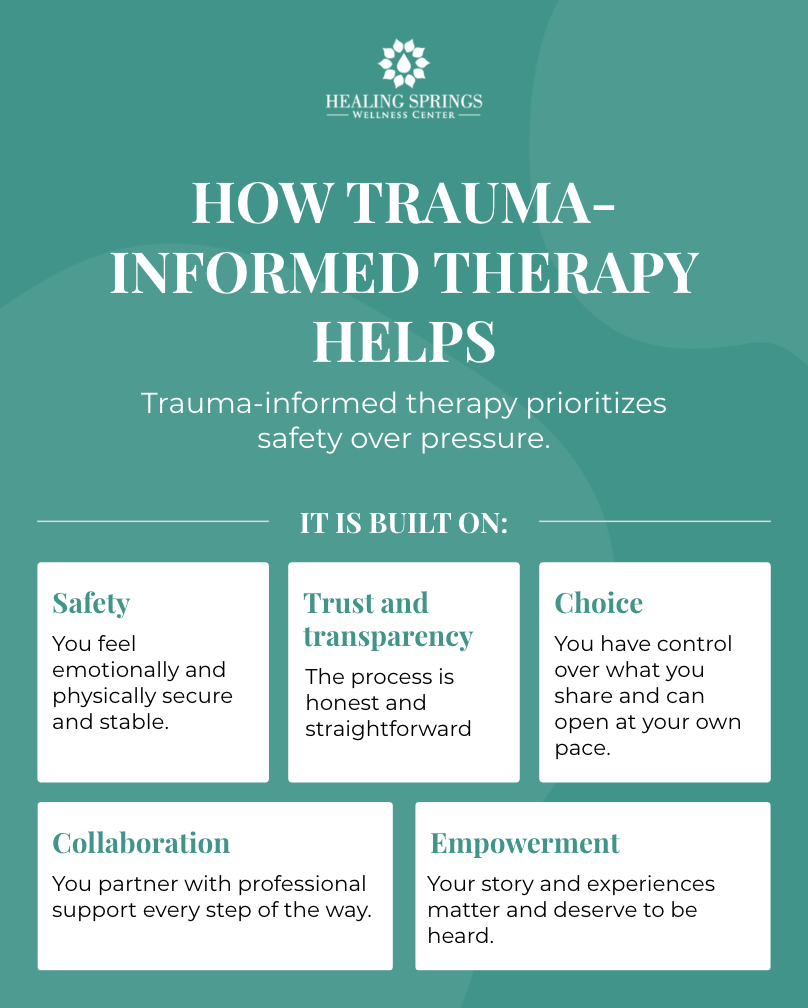
The trauma informed therapy approach is guided by five core principles:
- Safety
- Trust and transparency
- Choice
- Collaboration
- Empowerment
These principles ensure that therapy feels supportive, respectful, and effective.
What are the three concepts of Trauma-Informed practice?
Trauma informed practice is built on three key concepts:
- Realizing the widespread impact of trauma
- Recognizing how trauma affects individuals
- Responding by integrating trauma-sensitive practices
How is Trauma-Informed Therapy different?
Trauma informed therapy differs from traditional therapy because it:
- Focuses on past experiences and their ongoing impact
- Integrates both mind and body in healing
- Prioritizes safety at every stage
- Avoids re-traumatization
It reframes the healing process in a more compassionate and effective way.
Is EMDR or CBT better for Trauma?
Both EMDR and CBT are powerful interventions for trauma, but they serve different purposes:
- CBT helps change negative thought patterns
- EMDR helps process traumatic memories at a deeper level
Often, therapists combine both as part of broader trauma therapy techniques and in many cases, both methods are integrated.
Final thoughts
Trauma informed therapy is about creating a safe, structured path toward lasting healing.
By addressing both emotional and physiological responses, it helps individuals process their experiences, reduce triggers, and move forward with greater clarity and stability.
Ready to begin your Healing Journey?
If you’re considering trauma therapy, working with a trained professional can help you process your experiences safely and effectively.
At Healing Springs Wellness, our approach to trauma-informed therapy integrates evidence-based techniques like EMDR, somatic practices, and personalized care to support your healing journey.
👉Explore trauma counselling services
Healing doesn’t require you to have all the answers upfront. It begins with feeling safe enough to explore them, at your own pace.