He slammed the car door so hard the windows rattled. Over a parking spot. Again.
His wife noticed his jaw clenching during dinner, his responses getting shorter and sharper. The kids started walking on eggshells. But when she gently asked if something was wrong, he insisted he was “fine.”
Sound familiar?
For many men dealing with trauma, anger becomes the default setting. It’s not about being aggressive or difficult. It’s about survival. And understanding what’s really happening beneath that anger man displays could change everything, for him and everyone who loves him.
Why Men’s Anger After Trauma Looks Different
When trauma strikes, everyone’s brain responds differently. But research shows that men are more likely to express their trauma through anger rather than sadness or fear.
Why? Because society teaches boys early on that anger is acceptable while vulnerability is weakness. When a man experiences something traumatic, whether it’s combat, abuse, an accident, or loss, his mind searches for a safe way to express the overwhelming emotions inside.
Anger feels safer. It feels more masculine. It feels like control.
But here’s the truth: that anger isn’t really anger at all. It’s fear wearing a disguise. It’s grief pretending to be rage. It’s vulnerability hiding behind a wall.
What Male Anger Issues Really Look Like
A man’s anger after trauma doesn’t always look explosive. Sometimes it’s quiet, constant, and exhausting.
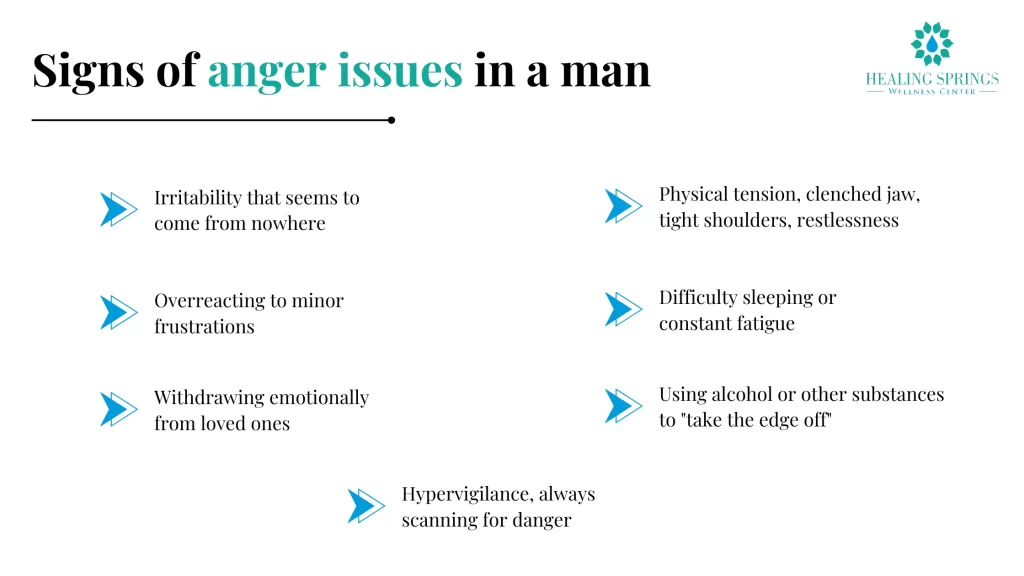
Signs of anger issues in a man include:
- Irritability that seems to come from nowhere
- Overreacting to minor frustrations
- Withdrawing emotionally from loved ones
- Physical tension, clenched jaw, tight shoulders, restlessness
- Difficulty sleeping or constant fatigue
- Using alcohol or other substances to “take the edge off”
- Hypervigilance, always scanning for danger
Research shows that men with PTSD express more anger compared to women with PTSD, reflecting differences in how genders respond to trauma. This isn’t a character flaw. It’s a symptom. In many cases, anger is connected to unresolved emotional wounds.
Understanding the signs of repressed trauma in adults can help explain why intense reactions appear long after the original event.
When you’re trapped in survival mode, your nervous system stays on high alert. After trauma, a person with PTSD may feel that threat is all around, even when this is not true. Every situation becomes a potential danger. Every interaction feels like a battle.
That’s exhausting. And anger becomes the body’s way of staying ready to fight.
The Hidden Emotions Behind a Man in Anger
Here’s what most people don’t understand about the anger of a man dealing with trauma: it’s almost never just anger.
Underneath that explosive reaction or that cold withdrawal, there’s usually:
Fear
Fear of being hurt again. Fear of losing control. Fear of appearing weak or incapable.
Shame
Men often blame themselves for their trauma or for how they’re responding to it. They think, “I should be stronger than this.”
Grief
Loss changes us. Whether it’s the loss of safety, innocence, a loved one, or the person you used to be, grief needs somewhere to go.
Vulnerability
The most threatening emotion of all for many men. Being vulnerable means admitting you’re hurting, and that feels dangerous.
Think of anger as a security guard standing at the door of your heart. Its job is to keep all those “unacceptable” emotions locked inside where no one, including you, has to deal with them.
But those emotions don’t disappear. They build pressure. And eventually, that pressure has to escape somewhere.
What Causes Sudden Anger in Men After Trauma?
Ever wonder why a man seems perfectly fine one moment and then erupts the next?
It’s not random. It’s about triggers.
When someone has PTSD, their response to extreme threats can become “stuck,” leading them to respond to all stress in survival mode. Their nervous system is like a fire alarm that’s too sensitive, it goes off even when there’s no real fire.
Common triggers include:
- Feeling controlled or trapped
- Reminders of the traumatic event (sounds, smells, situations)
- Perceived criticism or disrespect
- Feeling powerless or helpless
- Sleep deprivation and physical exhaustion
- Stress that accumulates over time
What looks like “sudden” anger usually isn’t sudden at all. It’s been building beneath the surface, and something finally tips it over the edge.
The Anger of a Gentle Man: When Nice Guys Get Angry
Perhaps the most heartbreaking manifestation is the anger of a gentle man, someone who’s naturally kind, patient, and caring, but who now finds himself snapping at the people he loves most.
This creates intense shame. “This isn’t who I am,” he thinks. “I’m becoming someone I don’t recognize.”
But here’s the truth: trauma changes brain chemistry. It’s not about who you are at your core. The trauma and shock can affect how well someone learns to control emotions, leading to frequent outbursts of extreme emotions.
That gentle man is still in there. He’s just struggling with a nervous system that won’t calm down.
A Man’s Deepest Emotional Need
So what do men really need when they’re struggling with trauma and anger?
Permission to be human.
Society tells men they need to be strong, stoic, unshakeable. But that’s impossible when you’re carrying the weight of trauma.
A man’s deepest emotional need is the same as anyone else’s: to be seen, understood, and accepted, especially in his struggle. He needs to know that vulnerability isn’t weakness. That asking for help isn’t failure. That healing is possible.
How to Deal with a Man Who Gets Angry Easily
If you love someone struggling with trauma-related anger, here’s what helps:
Recognize the anger is a symptom, not the problem
Don’t take it personally. His anger isn’t really about you.
Create safety, not confrontation
Approach him when things are calm. Use phrases like “I’ve noticed…” rather than “You always…”
Encourage professional help
Trauma-informed therapy can teach him to process what’s underneath the anger.
Set boundaries with compassion
You can be supportive while protecting yourself. “I want to help, but I can’t be yelled at.”
Practice the 5-second rule
Research shows that when couples were forced to wait just five, 10, or 15 seconds before acting on anger, their aggressive responses decreased significantly. Encourage a brief pause before reacting.
What Is the 5 Second Rule for Anger?
The 5-second rule for anger is simple but powerful: when you feel anger rising, pause and count to five before responding.
Why does this work? Those few seconds create a buffer between emotions and actions, helping prevent heated moments from escalating. It gives your brain time to shift from reactive survival mode to thoughtful response mode.
It’s not about suppressing anger. It’s about creating space between feeling and action, space where healing can begin.
Your Path Forward Starts Here
That anger you’re carrying? It’s not who you are. It’s your nervous system doing everything it can to protect you from pain you haven’t processed yet.
You don’t have to carry this alone. Many men also benefit from physical and nervous system techniques like trauma release exercises that help the body release stored stress and emotional tension. You don’t have to keep pretending you’re fine. And you definitely don’t have to let trauma steal your peace or your relationships.
Ready to understand what’s beneath your anger and reclaim your emotional freedom? At Healing Springs Wellness, our trauma-informed therapists specialize in helping men process trauma and build healthier emotional responses. We create a safe, judgment-free space where you can finally put down the armor. Schedule your consultation today and take the first step toward the peace you deserve.
FAQ MAN’s ANGER
What are male anger issues?
Male anger issues refer to persistent, intense, or inappropriate anger responses that interfere with daily life and relationships.
What does the Bible say about man’s anger?
The Bible addresses anger throughout scripture, with James 1:19-20 stating: “Everyone should be quick to listen, slow to speak and slow to become angry, because human anger does not produce the righteousness that God desires.”
What causes sudden anger in men?
Sudden anger in men, especially after trauma, is typically triggered by perceived threats, feeling controlled, reminders of traumatic events, sleep deprivation, accumulated stress, or situations that create feelings of helplessness.
What is the fastest way to calm a man when he is angry?
Give him space without abandoning him. Lower your voice and speak calmly. Avoid criticism or telling him to “calm down.” Acknowledge his feelings: “I see you’re upset.” If he’s open to it, encourage deep breathing or suggest stepping outside for fresh air.
How to melt his heart when he is angry?
Approach him with genuine empathy rather than trying to “fix” him. Say things like “I’m here when you’re ready to talk” or “I can see this is hard for you.” Physical touch (if he’s receptive) like a hand on his shoulder can help.
What text will make him cry?
A heartfelt, sincere message that acknowledges his struggle without judgment can be powerful: “I see how hard you’re fighting even when it doesn’t feel like it.
How to deal with a man who gets angry easily?
Don’t take his anger personally, it’s often about unprocessed pain, not you. Set clear boundaries with compassion: “I want to support you, but I need respectful communication.” Encourage him to seek professional help for underlying trauma. Practice self-care so you don’t absorb his emotional state.
Disclaimer: This article is for informational purposes only and does not constitute medical or psychological advice. If you or someone you know is experiencing severe anger, trauma, or mental health concerns, please consult with our qualified mental health professional.