
One moment, you’re driving normally. The next, metal crunches, airbags explode, and your world goes silent.
Your body stopped. But inside, your organs kept moving.
This is deceleration trauma, an invisible force that can cause devastating injuries, even when there’s not a scratch on your skin. Understanding what happens during these split-second events could save your life or help you recognize when you need immediate medical attention.
What Is Deceleration Trauma?
Deceleration trauma is an injury that occurs when your body suddenly stops moving while your internal organs continue their forward motion. Think of it like this: when a car crashes into a wall, the vehicle stops instantly, but everything inside, including you, keeps traveling at the original speed until something stops it.
The deceleration trauma meaning is simple but serious: it’s the damage caused by this sudden halt in movement. Your brain, heart, liver, spleen, and other organs slam against bone, tissue, and each other, causing internal injuries that may not be immediately visible.
This type of trauma most commonly occurs during:
- High-speed motor vehicle accidents
- Falls from significant heights
- Sports injuries, especially in contact sports
- Motorcycle crashes
- Pedestrian accidents
Rapid deceleration trauma happens in milliseconds, but the consequences can last a lifetime.
Understanding Penetrating, Blunt, and Deceleration Trauma
Medical professionals categorize traumatic injuries into three main types, each requiring different treatment approaches:
Penetrating Trauma occurs when an object pierces the skin and enters the body, creating an open wound. Knife wounds and gunshot injuries fall into this category.
Blunt Force Trauma happens when your body is struck by or strikes an object without the skin being broken. You might see bruising, but the damage underneath can be severe.
Deceleration Trauma is a specific type of blunt trauma caused by sudden stopping. It’s the mechanism behind many acceleration deceleration trauma injuries, where rapid changes in speed cause internal damage.
These categories often overlap. A car accident can cause all three types simultaneously, penetrating injuries from broken glass, blunt trauma from impact, and deceleration trauma from the sudden stop.
What Is the Most Common Cause of Deceleration Injuries?
Motor vehicle accidents are overwhelmingly the most common cause of deceleration injuries, particularly head-on collisions and crashes into fixed objects like trees or walls.
The statistics are sobering. According to medical research, deceleration injuries account for a significant percentage of trauma-related deaths, especially when the aorta is involved. Without immediate surgical intervention, aortic rupture from deceleration trauma is nearly always fatal.
Other common causes include:
- Falls from heights (construction accidents, balcony falls)
- High-impact sports (football, rugby, skiing)
- Motorcycle accidents
- Pedestrians struck by vehicles
The key factor isn’t just speed, it’s the rate of deceleration. Even lower speeds can cause severe injury if the stop is abrupt enough.
Recognizing the Symptoms of Deceleration Trauma
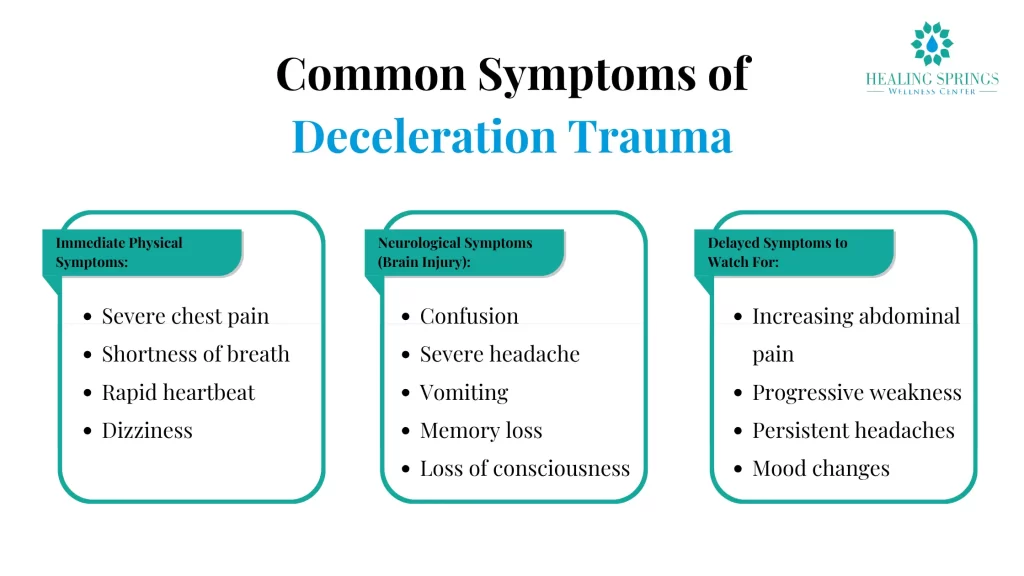
Identifying deceleration trauma quickly can be lifesaving. Some symptoms appear immediately, while others may develop hours or even days later.
Immediate Physical Symptoms:
- Severe chest or abdominal pain
- Difficulty breathing or shortness of breath
- Rapid heart rate or irregular heartbeat
- Dizziness or loss of consciousness
- Visible bruising, especially across the chest or abdomen
- Back pain between the shoulder blades (can indicate aortic injury)
Neurological Symptoms (Brain Injury):
- Confusion or disorientation
- Severe headache
- Nausea and vomiting
- Vision problems or dilated pupils
- Memory loss
- Loss of consciousness, even briefly
- Slurred speech or difficulty concentrating
Delayed Symptoms to Watch For:
- Increasing abdominal pain or swelling
- Progressive weakness or fatigue
- Persistent headaches that worsen
- Mood changes or personality shifts
- Balance problems or coordination issues
If you’ve been in any accident involving sudden deceleration, seek medical evaluation immediately, even if you feel fine. Many serious injuries from blunt deceleration trauma don’t show symptoms right away.
Which Organ Is Affected by Trauma Most Often?
In deceleration trauma specifically, the brain and aorta are most frequently affected. However, in overall blunt trauma cases, the liver is the most commonly injured solid organ, followed by the spleen.
The brain is particularly vulnerable because it’s suspended in fluid inside the skull. During deceleration, it can bounce and rotate, causing widespread damage even without direct impact.
The organs most at risk during sudden deceleration trauma include:
- Brain: Concussions, contusions, diffuse axonal injury
- Aorta: Tears and ruptures, particularly at the isthmus
- Liver: Lacerations and hemorrhage
- Spleen: Rupture and bleeding
- Kidneys: Tears, especially where blood vessels attach
- Intestines: Tears at fixed points
Trauma Therapy Options for Physical Recovery
Medical treatment for deceleration trauma depends on the severity and location of injuries. Time is critical, every minute counts when internal bleeding or brain swelling is involved.
Emergency Medical Interventions:
Immediate stabilization focuses on the ABC’s, Airway, Breathing, and Circulation. Emergency teams will:
- Secure your airway and provide oxygen
- Control bleeding and manage shock
- Perform emergency imaging (CT scans, X-rays, ultrasound)
- Monitor vital signs continuously
- Administer IV fluids and blood products if needed
Surgical Treatment:
Many deceleration injuries require surgical intervention:
- Aortic repair or replacement for vascular injuries
- Craniotomy to relieve brain swelling
- Organ repair or removal (spleen, portions of liver or intestine)
- Orthopedic surgery for fractures
Rehabilitation and Long-Term Care:
Physical recovery from deceleration trauma often requires extensive rehabilitation:
- Physical therapy to rebuild strength and mobility
- Occupational therapy for daily living skills
- Speech therapy for brain injury recovery
- Cardiac rehabilitation for heart-related injuries
What Are the Physical Signs Your Body Is Releasing Trauma?
Healing from trauma, both physical and psychological, is a process. Your body gives you signs when it’s releasing stored trauma:
Positive Signs of Trauma Release:
- Muscle trembling or shaking (especially after therapy or bodywork)
- Waves of emotion (crying, laughing) that come and go
- Deep sighing or yawning
- Warmth spreading through your body
- Temporary increase in dreams or nightmares
- Feeling more grounded and present
- Improved sleep quality over time
- Reduced chronic pain or tension
These signs indicate your nervous system is shifting from survival mode to a state of healing and restoration.
If you want a deeper understanding of how healing can show up physically, our guide on signs your body is releasing trauma explains common nervous system responses during recovery.
Mental Health Treatment for Trauma Recovery
Addressing the psychological impact of deceleration trauma is as important as treating physical injuries. Several evidence-based therapies have proven effective:
Trauma-Focused Cognitive Behavioral Therapy (CBT): CBT helps you identify and change negative thought patterns related to the trauma. You’ll learn coping strategies and gradually confront trauma-related memories in a safe environment.
Eye Movement Desensitization and Reprocessing (EMDR): EMDR uses bilateral stimulation (typically eye movements) while you recall traumatic memories. This process helps your brain reprocess the trauma, reducing its emotional impact.
For readers exploring this approach further, our article on EMDR for stress management explains how EMDR can support trauma recovery and help reduce the lingering effects of overwhelming experiences.
Somatic Experiencing: This body-focused therapy helps release trauma stored in your nervous system. By tuning into physical sensations, you can complete the body’s natural stress response cycle that was interrupted during the traumatic event.
Prolonged Exposure Therapy: Through gradual, repeated exposure to trauma-related memories and situations you’ve been avoiding, this therapy helps reduce fear and anxiety over time.
Group Therapy: Connecting with others who’ve experienced similar trauma can reduce isolation and provide mutual support and understanding.
Medication: While not a therapy itself, medication can support your recovery. Antidepressants, anti-anxiety medications, or sleep aids may help manage symptoms while you work through therapy.
Because physical accidents can also leave emotional wounds behind, it may help to review these signs of emotional trauma if you notice anxiety, numbness, or distress after a sudden-impact event.
Taking the First Step Toward Healing
Recovering from deceleration trauma, whether it happened last week or years ago, takes courage, but you don’t have to face it alone.
Your body and mind want to heal. With the right support and treatment, you can reclaim your life from trauma’s grip. The physical wounds may have healed, but addressing the invisible scars is what will set you free.
Ready to start your healing journey? Our trauma specialists at Healing Springs Wellness understand the complex impact of deceleration injuries on both body and mind. We offer personalized treatment plans combining medical expertise with compassionate mental health care. Schedule your consultation today and take the first step toward complete recovery.
FAQ: Common Questions About Deceleration Trauma
How does a deceleration injury occur?
A deceleration injury occurs when your body suddenly stops moving while your internal organs continue their forward motion due to inertia.
What are the four types of blunt force trauma?
The four main types of blunt force trauma are: (1) Contusions (bruises), where blood vessels rupture causing discoloration; (2) Abrasions (scrapes), where skin is scraped away by a rough surface; (3) Lacerations (tears), creating irregular wounds that can be internal or external; and (4) Fractures (broken bones), ranging from hairline cracks to complete breaks.
What is the most common site of deceleration injury?
The aortic isthmus, where the aorta curves and is partially anchored in the chest, is the most common site of deceleration injury. This area is vulnerable because the heart and ascending aorta continue moving forward during sudden stops while the descending aorta remains relatively fixed, creating shearing forces.
What is the most common cause of deceleration injuries?
Motor vehicle accidents are overwhelmingly the most common cause of deceleration injuries, particularly head-on collisions and crashes into fixed objects.
Which organ is affected by trauma?
The organs most vulnerable during sudden deceleration include the brain (concussions, contusions), aorta (tears and ruptures), liver (lacerations), spleen (rupture), kidneys (tears at blood vessel attachment points), and intestines (tears at fixed points).
What are the physical signs your body is releasing trauma?
Physical signs your body is releasing stored trauma include involuntary muscle trembling or shaking, waves of warmth or cold, spontaneous emotional releases (crying or laughing), deep sighing or yawning, temporary fatigue followed by increased energy, vivid dreams or nightmares, muscle tension releasing, tingling sensations in limbs, changes in breathing patterns, and improved sleep quality.
What does unresolved trauma look like in adults?
Unresolved trauma in adults manifests through behavioral signs (avoiding triggers, hypervigilance, social withdrawal), emotional symptoms (persistent anxiety, depression, irritability, emotional numbness), physical issues (chronic unexplained pain, tension headaches, digestive problems, sleep disturbances), and cognitive difficulties (concentration problems, memory issues, intrusive thoughts, nightmares).
Where does trauma get stored in your body?
Trauma becomes stored in your body at a somatic level, in your muscles, nervous system, and connective tissues. Common storage sites include the neck and shoulders (chronic tension, hunched posture), jaw (clenching, teeth grinding), chest (tightness, shallow breathing), abdomen (digestive issues, persistent tension), and hips and pelvis (tightness, stored emotional trauma).
Disclaimer: This article is for informational purposes only and does not constitute medical advice. Deceleration trauma is a medical emergency. If you’ve been in an accident involving sudden deceleration, seek immediate medical attention. For mental health concerns related to traumatic experiences, consult with our qualified mental health professional.