
Intrusive Thoughts: Causes, Triggers, and How to Manage Them

What are intrusive thoughts? Understand common triggers, OCD intrusive thoughts, causes and practical strategies to reduce their impact on daily life.

You’re sitting on the couch after a long stressful day and suddenly an unwelcome image flashes into your head, that’s violent or sexual or maybe something that’s just out of your character; and you instantly feel ashamed and afraid. If this sounds familiar to you, you’re not sick and having such thoughts does not make you a bad person. Many people experience these sudden and unwanted mental intrusions, especially when they’ve been silently ignoring their health for a long time. 

This blog explains what intrusive thoughts are, common types and triggers, how they relate to OCD, and simple yet practical steps on how to stop intrusive thoughts? so you can feel better. 

What are Intrusive thoughts

Intrusive thoughts meaning sudden, involuntary thoughts that often feel distressing. They can be brief flashes or persistent worries. If you’ve ever had such thoughts, know that they are more common than you might realize. 

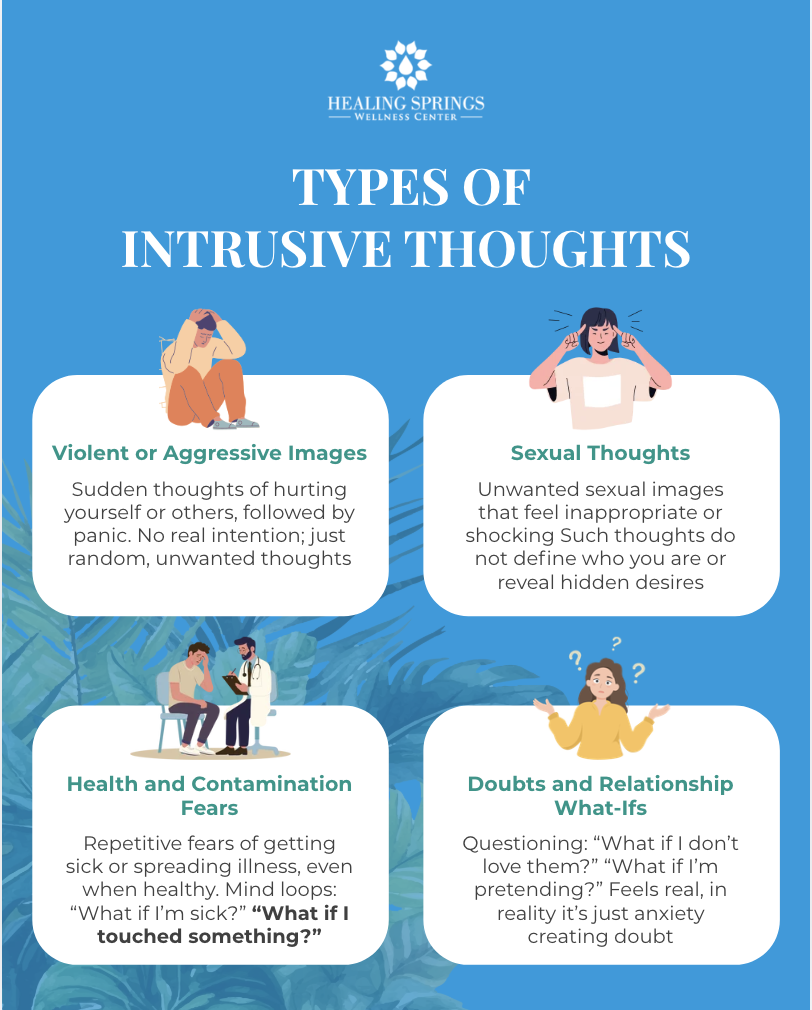
Types of Intrusive Thoughts 

1. Violent or aggressive images : 

Pictures of harming someone. You might get these sudden thoughts like hurting yourself or someone else, and then you start panicking about them.

But most of the time, there’s no real intention behind it. It’s not something you want to do—it just shows up randomly in your mind like an unwanted thought.

The scary part is, you start questioning yourself… like, “What if a part of me actually wants this?” and that fear is what makes you overthink it even more.

But having a thought doesn’t mean you believe in it or will act on it. It’s just your mind throwing something at you, not a hidden desire. If you’re wondering how to stop Intrusive thoughts like these, the key is understanding they’re not commands.

2. Sexual Thoughts: 

You might also get unwanted sexual thoughts or mental images that feel inappropriate or disturbing.

And then you start judging yourself for them.

But remember, thoughts are just thoughts. Even if they feel shocking, unwanted, or keep coming back again and again, they don’t define who you are.

They are neither your intention nor your hidden desire.

3. Health and contamination fears:

Repetitive fears about getting sick or spreading illness even when you are physically and mentally healthy. 

You might find yourself stuck in this loop where your mind keeps asking: “What if I’m sick and I don’t even know it?” or “What if I touched something and now I’ve spread illness?”

And when you start reacting to them by checking, worrying, or repeating certain behaviours to feel “safe,” it can slowly turn into an obsessive loop, like OCD patterns; leading to OCD Intrusive thoughts 

However, the key is to remind yourself that: this is neither intuition nor it’s your body warning you. It’s just your mind getting stuck in a loop of fear. Understanding the intrusive thoughts meaning behind this fear helps break the cycle. 

4. Doubts and relationships “what if’s”: 

Doubts are one of the most common types of Intrusive thoughts. You might find yourself questioning your relationships – can be about big or small aspects — like “What if I don’t actually love them?” or “What if I’m only pretending and I don’t admit it?”

These thoughts can feel very real, almost like a warning. However, you don’t have to answer every question your mind throws at you. These thoughts are just the way, your anxiety is trying to create doubt. 

Different people experience different situations. It’s okay to have more than one type. Recognising your type is important. 

The more clearly you see the pattern, the less power it has over you.

What causes Intrusive thoughts 

A common misconception is that intrusive thoughts are caused when something is actually wrong with you, which isn’t true. It usually happens when your brain is just overactive. 

1. Anxiety and stress

Sometimes your mind is stressed, tired, or just trying too hard to stay “safe,” and in that process it starts throwing random unwanted and unplanned thoughts at you. They can feel embarrassing or scary. 

The more stressed you are, the more random and intense the thoughts can feel.

2. Overthinking 

The moment you notice a thought and start asking, “Why did I think this?” or “What does this mean about me?” your brain treats it like something important and keeps bringing it back again and again. This is why learning how to stop Intrusive thoughts requires stopping the overthinking loop.

3. Cognitive processes 

Sometimes it’s just the way the brain processes information. 

It is always generating different thoughts in the background, but the moment you start focusing more on them or trying to sort them; they feel louder and more important than they actually are.

4. Trauma and PTSD

Past trauma or PTSD can make the brain extra sensitive to certain triggers. You might feel safe, but your mind may still react as if danger is present. 

This increases the chances of bringing unwanted thoughts or images related to past experiences, even when you don’t want to think about them.

5. Biological and sleep factors 

Your brain is also physical. Lack of sleep, genetics, hormonal changes, poor nutrition, or chemical imbalances can affect massively in the process of filtering out thoughts from mind. 

When the brain is tired or overloaded, it becomes easier for random intrusive thoughts to occur and feel stronger than usual.

Intrusive thoughts are common and don’t define who you are. If they start affecting your daily life, it’s important to seek support from a mental health professional.

Common Triggers for Intrusive Thoughts

Certain life situations and habits can make Intrusive thoughts more frequent or difficult to ignore.

Major life transitions (new parenthood, loss, job changes)

Big life changes naturally increase stress, uncertainty, and emotional load. During these phases, the brain becomes more alert and sensitive, which can lead to more intrusive thoughts. It simply means your system is adjusting to change.

Exposure to distressing media or reminders

Watching or hearing about violence, accidents, illness, or disturbing content constantly can leave mental “images” behind. Even if you’re not actively thinking about it, the brain can replay or remix those visuals later as intrusive thoughts.

Lack of sleep and physical exhaustion

When you’re exhausted, your brain’s filtering system becomes weak. This makes it difficult to ignore random thoughts, so they feel louder and more repetitive than usual.

Substance use or withdrawal

Caffeine overload, stimulants, alcohol, or withdrawal from substances can affect brain chemistry and increase anxiety or mental instability. This can make intrusive thoughts feel more intense or vivid for a short period.

Repeated mental checking or overthinking

One of the strongest triggers is your response to the thought itself.

  • Trying to suppress it
  • Repeatedly analyzing it
  • Mentally checking “what does this mean about me?”

This teaches the brain that the thought is important, so it keeps bringing it back.

OCD and intrusive thoughts

For some individuals, OCD can make intrusive thoughts more frequent and distressing.

Notice these common OCD patterns:

  • Obsession (unwanted, repetitive thoughts, doubts, or fears) leads to intense anxiety.
  • Compulsion (checking, repeating, seeking reassurance) temporarily reduces anxiety.
  • Avoiding certain places, people, things, or thoughts because they trigger anxiety. 
  • Replaying past situations in your head to make sure nothing “wrong” happened. 

OCD Patterns can vary from person to person. Experiencing some of these behaviours becomes a concern when it starts affecting daily life. 

How to manage intrusive thoughts

Notice and label it :
The first step is simply recognizing it as an intrusive thought. Observe the thought and name it: “This is just an
intrusive thought.”

Don’t argue with the thought :
Trying to prove the thought wrong or force away usually makes it stronger. The mind treats that as “important” and keeps bringing it back. You don’t have to fight against it or engage with it. 

Stop seeking certainty:
Intrusive thoughts majorly depend  on “what if” questions. The more you try to get 100% certainty, the more stuck you feel. 

Ground yourself in the present:
Move your attention to what you’re actually doiing right now including your surroundings or work. Don’t force yourself to remove the thought instantly from the brain, instead allow yourself to ignore it. 

Reduce compulsive responses: Avoid checking, reassurance-seeking gives relief and strengthens the process. 

Medication when needed: Discuss with a psychiatrist if thoughts are severe or disabling. Medication often works best combined with CBT/ERP.

When to seek immediate help

You should seek immediate help when intrusive thoughts stop being “just thoughts” and start affecting your safety, functioning, or sense of control.

Intrusive thoughts alone are common and not dangerous, but when they become intense, uncontrollable, or risky, reaching out for a psychologist, psychiatrist, or emergency support is the safest step.

If intrusive thoughts are becoming overwhelming, you do not have to manage them alone. Reach out to Healing Springs Wellness Center today to schedule a consultation and get the support you deserve.

Authoritative resources:

Intrusive Thoughts FAQs

How to deal with intrusive thoughts?

You can change the way you respond to intrusive thoughts. 

What actually helps:

  • Label it: “this is an intrusive thought”
  • Don’t react emotionally or argue with it
  • Don’t do mental checking or reassurance
  • Let it sit in the background and continue your task

Grounding practice (quick reset):

  • Name 5 things you can see
  • 4 things you can touch
  • 3 things you can hear

These steps reduce distress and frequency over time.

Can intrusive thoughts make you mention the past?


Yes, they can bring up past events randomly and repeatedly.

Your brain may replay embarrassing moments, common mistakes and emotionally charged memories.

Are intrusive thoughts normal?


Intrusive thoughts themselves are not serious or dangerous. They become a problem when they are frequent, cause significant distress, or lead to compulsive behavior.

How to control intrusive thoughts in the moment?


Pause, take three slow breaths, label the thought, and do a grounding activity. Delay any urge to perform a compulsion; urges usually decrease within minutes.

What causes intrusive thoughts?


They usually come from a mix of mental + biological factors:

  1. Cognitive processes – Overthinking, mental checking, and trying too hard to find meaning in thoughts.

  2. Anxiety and stress – Many intrusive thoughts become stronger during periods of anxiety and stress.

  3. Depression – Low mood can make thoughts repetitive and heavier.

  4. Trauma and PTSD – Past experiences make the brain extra sensitive to triggers.

  5. Biological and sleep factors – Poor sleep, fatigue, or hormonal imbalance can reduce mental filtering.

Intrusive Thoughts: Causes, Triggers, and How to Manage Them

You’re sitting on the couch after a long stressful day and suddenly an unwelcome image flashes into your head, that’s violent or sexual or maybe something that’s just out of your character; and you instantly feel ashamed and afraid. If this sounds familiar to you, you’re not sick and having such thoughts does not make you a bad person. Many people experience these sudden and unwanted mental intrusions, especially when they’ve been silently ignoring their health for a long time. 

This blog explains what intrusive thoughts are, common types and triggers, how they relate to OCD, and simple yet practical steps on how to stop intrusive thoughts? so you can feel better. 

What are Intrusive thoughts

Intrusive thoughts meaning sudden, involuntary thoughts that often feel distressing. They can be brief flashes or persistent worries. If you’ve ever had such thoughts, know that they are more common than you might realize. 

Types of Intrusive Thoughts 

1. Violent or aggressive images : 

Pictures of harming someone. You might get these sudden thoughts like hurting yourself or someone else, and then you start panicking about them.

But most of the time, there’s no real intention behind it. It’s not something you want to do—it just shows up randomly in your mind like an unwanted thought.

The scary part is, you start questioning yourself… like, “What if a part of me actually wants this?” and that fear is what makes you overthink it even more.

But having a thought doesn’t mean you believe in it or will act on it. It’s just your mind throwing something at you, not a hidden desire. If you’re wondering how to stop Intrusive thoughts like these, the key is understanding they’re not commands.

2. Sexual Thoughts: 

You might also get unwanted sexual thoughts or mental images that feel inappropriate or disturbing.

And then you start judging yourself for them.

But remember, thoughts are just thoughts. Even if they feel shocking, unwanted, or keep coming back again and again, they don’t define who you are.

They are neither your intention nor your hidden desire.

3. Health and contamination fears:

Repetitive fears about getting sick or spreading illness even when you are physically and mentally healthy. 

You might find yourself stuck in this loop where your mind keeps asking: “What if I’m sick and I don’t even know it?” or “What if I touched something and now I’ve spread illness?”

And when you start reacting to them by checking, worrying, or repeating certain behaviours to feel “safe,” it can slowly turn into an obsessive loop, like OCD patterns; leading to OCD Intrusive thoughts 

However, the key is to remind yourself that: this is neither intuition nor it’s your body warning you. It’s just your mind getting stuck in a loop of fear. Understanding the intrusive thoughts meaning behind this fear helps break the cycle. 

4. Doubts and relationships “what if’s”: 

Doubts are one of the most common types of Intrusive thoughts. You might find yourself questioning your relationships – can be about big or small aspects — like “What if I don’t actually love them?” or “What if I’m only pretending and I don’t admit it?”

These thoughts can feel very real, almost like a warning. However, you don’t have to answer every question your mind throws at you. These thoughts are just the way, your anxiety is trying to create doubt. 

Different people experience different situations. It’s okay to have more than one type. Recognising your type is important. 

The more clearly you see the pattern, the less power it has over you.

What causes Intrusive thoughts 

A common misconception is that intrusive thoughts are caused when something is actually wrong with you, which isn’t true. It usually happens when your brain is just overactive. 

1. Anxiety and stress

Sometimes your mind is stressed, tired, or just trying too hard to stay “safe,” and in that process it starts throwing random unwanted and unplanned thoughts at you. They can feel embarrassing or scary. 

The more stressed you are, the more random and intense the thoughts can feel.

2. Overthinking 

The moment you notice a thought and start asking, “Why did I think this?” or “What does this mean about me?” your brain treats it like something important and keeps bringing it back again and again. This is why learning how to stop Intrusive thoughts requires stopping the overthinking loop.

3. Cognitive processes 

Sometimes it’s just the way the brain processes information. 

It is always generating different thoughts in the background, but the moment you start focusing more on them or trying to sort them; they feel louder and more important than they actually are.

4. Trauma and PTSD

Past trauma or PTSD can make the brain extra sensitive to certain triggers. You might feel safe, but your mind may still react as if danger is present. 

This increases the chances of bringing unwanted thoughts or images related to past experiences, even when you don’t want to think about them.

5. Biological and sleep factors 

Your brain is also physical. Lack of sleep, genetics, hormonal changes, poor nutrition, or chemical imbalances can affect massively in the process of filtering out thoughts from mind. 

When the brain is tired or overloaded, it becomes easier for random intrusive thoughts to occur and feel stronger than usual.

Intrusive thoughts are common and don’t define who you are. If they start affecting your daily life, it’s important to seek support from a mental health professional.

Common Triggers for Intrusive Thoughts

Certain life situations and habits can make Intrusive thoughts more frequent or difficult to ignore.

Major life transitions (new parenthood, loss, job changes)

Big life changes naturally increase stress, uncertainty, and emotional load. During these phases, the brain becomes more alert and sensitive, which can lead to more intrusive thoughts. It simply means your system is adjusting to change.

Exposure to distressing media or reminders

Watching or hearing about violence, accidents, illness, or disturbing content constantly can leave mental “images” behind. Even if you’re not actively thinking about it, the brain can replay or remix those visuals later as intrusive thoughts.

Lack of sleep and physical exhaustion

When you’re exhausted, your brain’s filtering system becomes weak. This makes it difficult to ignore random thoughts, so they feel louder and more repetitive than usual.

Substance use or withdrawal

Caffeine overload, stimulants, alcohol, or withdrawal from substances can affect brain chemistry and increase anxiety or mental instability. This can make intrusive thoughts feel more intense or vivid for a short period.

Repeated mental checking or overthinking

One of the strongest triggers is your response to the thought itself.

  • Trying to suppress it
  • Repeatedly analyzing it
  • Mentally checking “what does this mean about me?”

This teaches the brain that the thought is important, so it keeps bringing it back.

OCD and intrusive thoughts

For some individuals, OCD can make intrusive thoughts more frequent and distressing.

Notice these common OCD patterns:

  • Obsession (unwanted, repetitive thoughts, doubts, or fears) leads to intense anxiety.
  • Compulsion (checking, repeating, seeking reassurance) temporarily reduces anxiety.
  • Avoiding certain places, people, things, or thoughts because they trigger anxiety. 
  • Replaying past situations in your head to make sure nothing “wrong” happened. 

OCD Patterns can vary from person to person. Experiencing some of these behaviours becomes a concern when it starts affecting daily life. 

How to manage intrusive thoughts

Notice and label it :
The first step is simply recognizing it as an intrusive thought. Observe the thought and name it: “This is just an
intrusive thought.”

Don’t argue with the thought :
Trying to prove the thought wrong or force away usually makes it stronger. The mind treats that as “important” and keeps bringing it back. You don’t have to fight against it or engage with it. 

Stop seeking certainty:
Intrusive thoughts majorly depend  on “what if” questions. The more you try to get 100% certainty, the more stuck you feel. 

Ground yourself in the present:
Move your attention to what you’re actually doiing right now including your surroundings or work. Don’t force yourself to remove the thought instantly from the brain, instead allow yourself to ignore it. 

Reduce compulsive responses: Avoid checking, reassurance-seeking gives relief and strengthens the process. 

Medication when needed: Discuss with a psychiatrist if thoughts are severe or disabling. Medication often works best combined with CBT/ERP.

When to seek immediate help

You should seek immediate help when intrusive thoughts stop being “just thoughts” and start affecting your safety, functioning, or sense of control.

Intrusive thoughts alone are common and not dangerous, but when they become intense, uncontrollable, or risky, reaching out for a psychologist, psychiatrist, or emergency support is the safest step.

If intrusive thoughts are becoming overwhelming, you do not have to manage them alone. Reach out to Healing Springs Wellness Center today to schedule a consultation and get the support you deserve.

Authoritative resources:

Intrusive Thoughts FAQs

How to deal with intrusive thoughts?

You can change the way you respond to intrusive thoughts. 

What actually helps:

  • Label it: “this is an intrusive thought”
  • Don’t react emotionally or argue with it
  • Don’t do mental checking or reassurance
  • Let it sit in the background and continue your task

Grounding practice (quick reset):

  • Name 5 things you can see
  • 4 things you can touch
  • 3 things you can hear

These steps reduce distress and frequency over time.

Can intrusive thoughts make you mention the past?


Yes, they can bring up past events randomly and repeatedly.

Your brain may replay embarrassing moments, common mistakes and emotionally charged memories.

Are intrusive thoughts normal?


Intrusive thoughts themselves are not serious or dangerous. They become a problem when they are frequent, cause significant distress, or lead to compulsive behavior.

How to control intrusive thoughts in the moment?


Pause, take three slow breaths, label the thought, and do a grounding activity. Delay any urge to perform a compulsion; urges usually decrease within minutes.

What causes intrusive thoughts?


They usually come from a mix of mental + biological factors:

  1. Cognitive processes – Overthinking, mental checking, and trying too hard to find meaning in thoughts.

  2. Anxiety and stress – Many intrusive thoughts become stronger during periods of anxiety and stress.

  3. Depression – Low mood can make thoughts repetitive and heavier.

  4. Trauma and PTSD – Past experiences make the brain extra sensitive to triggers.

  5. Biological and sleep factors – Poor sleep, fatigue, or hormonal imbalance can reduce mental filtering.

Relevant Posts